Monday, November 7, 2005

Bangalore Malls

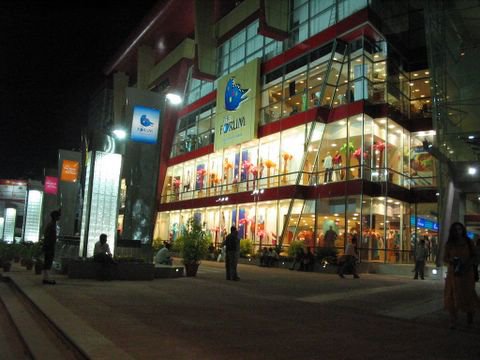
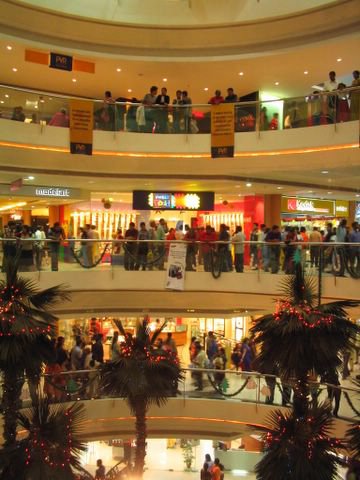
The Prestige Forum Mall is perhaps the most popular mall in Bangalore, and certainly seems to be the most profitable, given the amount of people that throng its aisles.
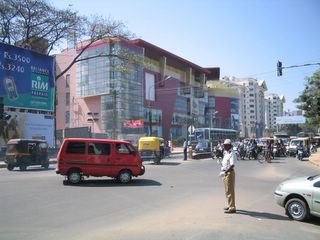

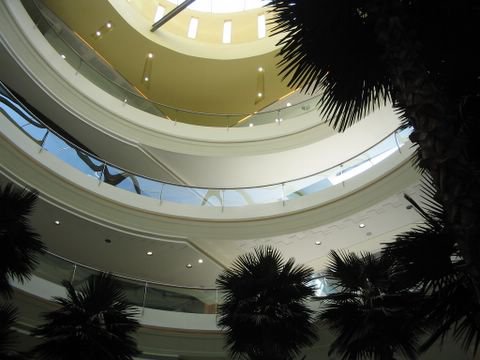
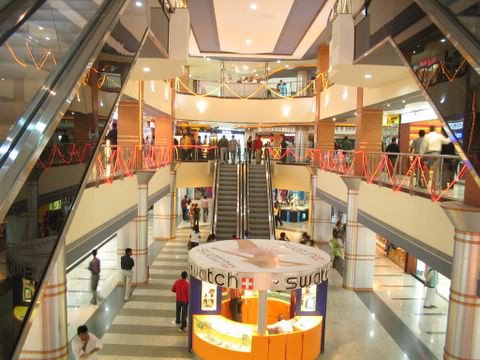
The mall opened in Feb 2004, and therefore the atrium looks so deserted - when I photographed it around that time.
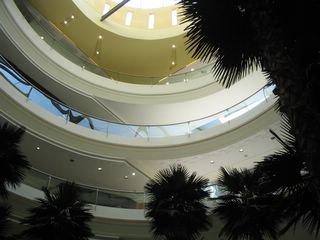

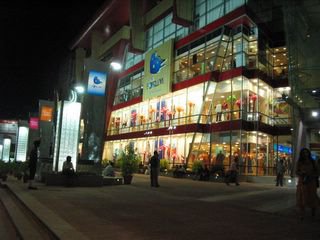
I have never carried a tripod inside the mall, so I had to rest the camera on something that was a bit low, but I still liked the results. The reflections of the store on the floor is what makes this photo interesting to me.
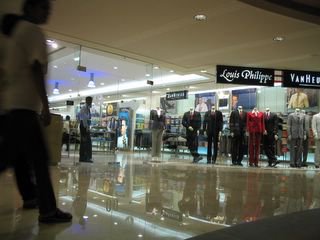


With a tripod and a longer exposure this shot would look a lot better, but still, I will take this.


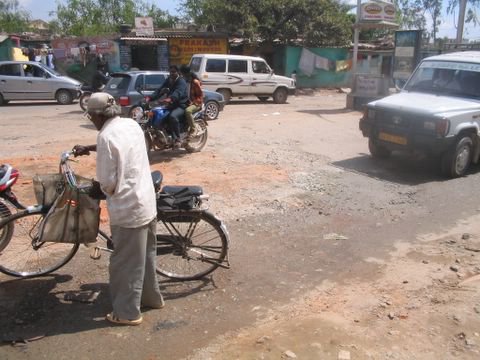
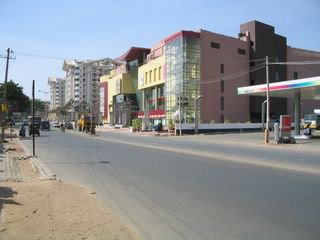
Given the total traffic chaos and mess on this stretch of road, it looks almost unbelievable that so little traffic can be seen...


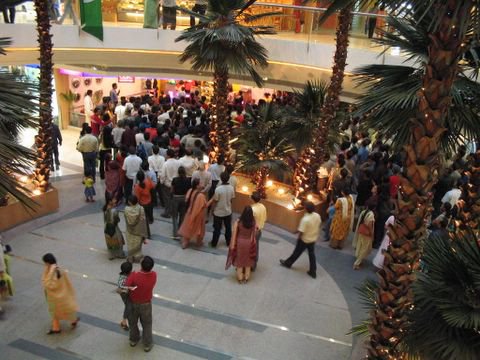
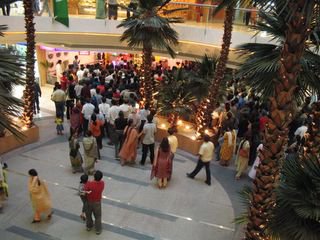
This shot is again inside the Forum mall. The people here have thronged to the Coffee Day outlet that had a television set to watch the last few overs of the first one-day match between India and Pakistan in Pakistan. I believe this was -the- last over, and every dot ball drew deafeningly loud cheers and whistles. Yes, cricket in India still has the power to unite people like nothing else!


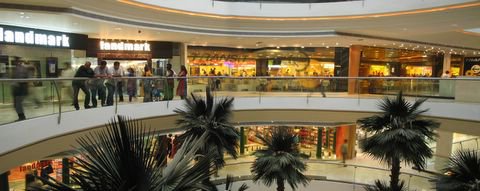
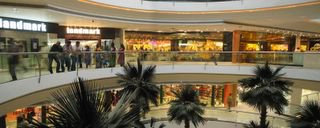
A wide (stitched) shot of the foodcourt in Forum mall.


The first day of the year 2005. The number of people was simply amazing.
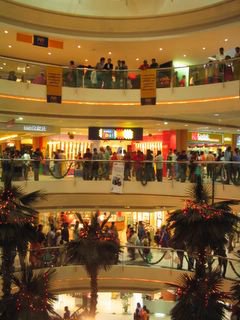


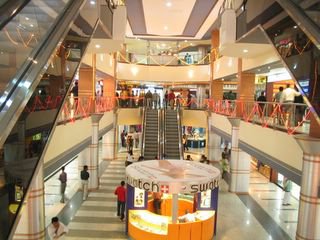
Garuda mall on Magrath Road is one of the latest additions to the rapidly growing list of malls in Bangalore. Relatively uncrowded, for the time being.

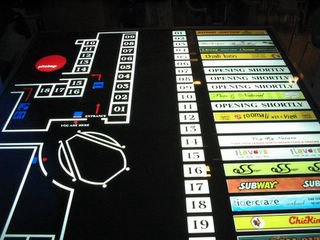
The foodcourt map at Garuda Mall.

© 2005, Abhinav Agarwal (अभिनव अग्रवाल). All rights reserved. Reposted to this blog, May 2013
Friday, November 4, 2005

Sikandra, Agra

Sikandra, the tomb of Akbar. Akbar was the third Mughal emperor (Babur and Humayun being the first and second).


The tomb was built over seven years, from 1605-12.


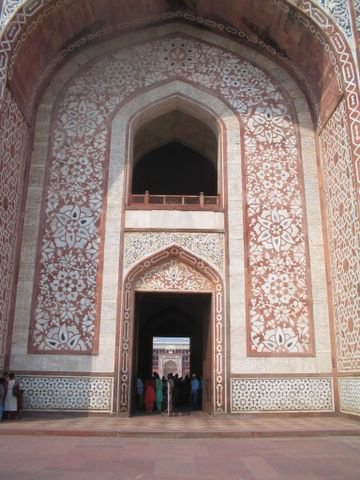
The entrance to the compound. The tomb at Sikandra is said to occupy a larger area than the Taj. And the compound is huge indeed.


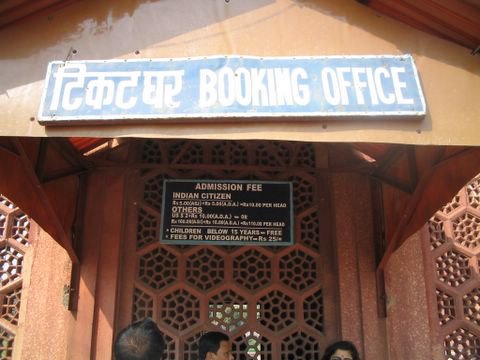
Note the differential admission fee for Indians and foreign nationals.


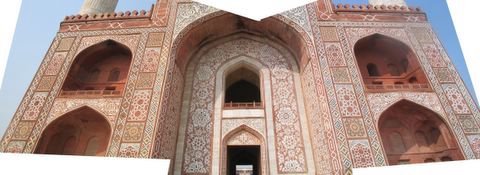
The imposing entrance to the compound.


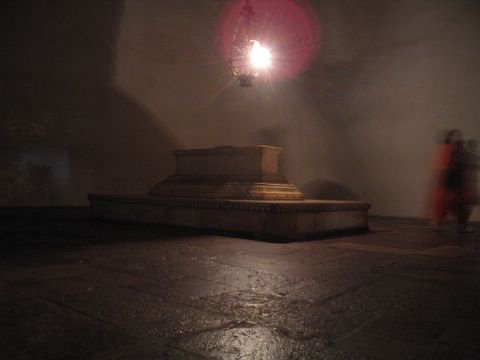
This is the tomb of Akbar - to get here you have to walk down a narrow and damp passage. Quite austere.


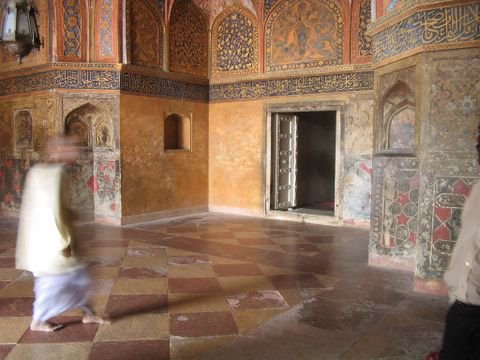
The entrance to the cenotaph can be seen in this photo. Some of the inlay work can be seen here; some of the inlay work used to be in gold, don't know if it still exists there or not.

© 2005, Abhinav Agarwal (अभिनव अग्रवाल). All rights reserved. Reposted to this blog, July 2013.

Agra Fort


Agra Fort is in Agra - that was not so tough to figure out, right? It's a really old fort, built of red sandstone. It's famous beacause it was (re)built by the Mughals, and ShahJahan, the husband of Mumtaz Mahal, and the person allegedly responsible for having built the Taj Mahal, was incarcerated in this fort by his son, Aurangzeb. These are the ramparts of the fort.


The fort is surrounded by a moat, and this photo has been taken from the 'Amar Singh' gate.


This is the entrance to the fort.


This shot is immediately after you pass through the Amar Singh entrance.


A closer look at the Amar Singh gate. As you can see, the entrance to the fort is not meant to be very welcoming. In fact was meant to impress visitors and intimidate possible intruders.


Only about a fourth of the fort is open to the public. The rest of the fort is occupied by the Air Force I believe (or maybe the Indian Army). Most of the interesting spots are anyway open to the public, including the famed 'sheesh mahal'.

This path was deliberately designed to accentuate echos, making it easy to listen for intruders. The high walls also meant that any large stone or boulder hurled from the top would crush people down below. Nice. Nothing like a 50 ton boulder to signal your hospitality.

There are two plaques here - one in English and one in Hindi.

The Agra Fort is also a World Heritage site. For a complete list of world heritage monuments you can visit this site: http://whc.unesco.org/en/list/. The Agra Fort was included in the list in 1983, and is listed under criteria C (iii). Criteria C (iii) states 'to bear a unique or at least exceptional testimony to a cultural tradition or to a civilization which is living or which has disappeared;'.


Now, I must admit that the guide was eloquent and good; I just didn't pay that close attention. After all, it was a blistering 35+C in the sun (that would be 95F). I think this leads to the palaces of two of ShahJahan's daughters, Jahanara and Roshanara. I could be wrong; someone let me know please :-)

The Taj Mahal is visible from the Agra Fort, they are not more than a few kilometers away. This photo doesn't quite do justice, but the next time, if I have a camera with a zoom, I shall strive to do better.


This place I know - Angoori Bagh (aka Grape Gardens). The soil for the grapevines was imported from Iran (Persia).


The inlay work and carvings are quite awesome, you would agree (even if you don't, I don't really care!)


And this is the Jehangiri Mahal. Built by the third Mughal emperor, Jehangir (aka Salim).

This I think is 'Khas Mahal'. It's been fenced off to prevent further damage to it.


This is the view of the Taj Mahal from the Agra Fort. I imagine the view is even prettier at sunset and during moonlit nights.


© 2005, Abhinav Agarwal. All rights reserved.

Tomb of Itmad-ud-Daulah, Agra

The tomb of Itmad-ud-Daulah - pillar of the state. Located in Agra. This fella was also known as Mirza Gyasbeg. His wife Armat Begum is also buried here. So says the plaque.

 
People say that the inlay work in this tomb is better than even the Taj Mahal. If you take a close look, you do find that the amount of very fine and detailed inlay work is quite impressive.

This tomb is not as well known as the Taj or Agra Fort, and as a result is not as well maintained. Parts of it are starting to fall apart, kind of expected for a structure that is close to 400 years old.

Red sandstone is very much fashionable in Agra, and going by the forts and tombs, has been so for a few hundred years at least.

A postcard moment!

A long exposure shot does bring out the exquisiteness of the inner structure also. Pity I didn't have a camera that allows me longer than 1 second exposures.


© 2005, Abhinav Agarwal. All rights reserved.

Wednesday, November 2, 2005

Bangalore Crumbling - 2

I have been posting about Bangalore and its crumbling infrastructure for some time now on this blog. And I have focused on Bannerghatta Road, by far the worst road in Bangalore, and now holder of the dubious distinction of having been voted as the worst road in India on NDTV.


This photo is of the start of the 'public private' partnership road, that was asphalted, 4-laned, not 6 months back.


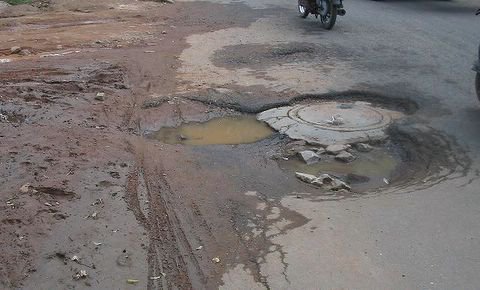
A teeny weeny bit of rain and there you have it - the state of the road is there for all to see.


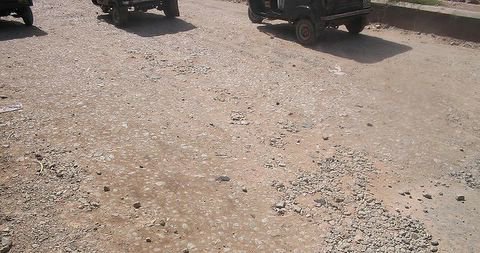
To be honest this is not strictly Bannerghatta Road, but a service road that runs parallel to it. I use the word 'road' only in the loosest of terms, as I don't quite have an adjective to describe what I shot here.


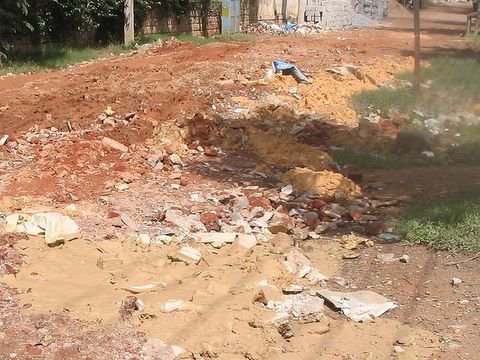
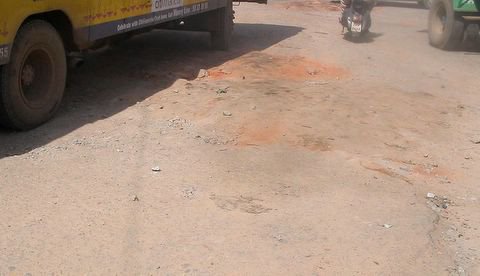
Bangalore civic authorities have a ready solution for the road degradation... simply cover it up with stones and mud and hope it doesn't rain.


I wonder if the government realizes the farcical humour in this sign... 9 crores is not a small sum, except for govt babus and politicians. 9 crores could have constructed an equal length of a national highway quality road. But only in Bangalore - it wasn't enough to asphalt a four lane stretch that could last even half a monsoon.


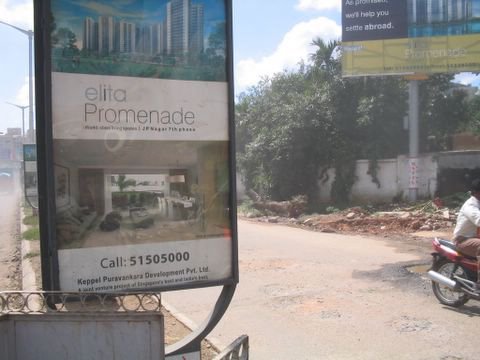
Property developers still try and market properties in and around JP Nagar's 9th phase as 'elite' and equivalent to living in a developed country. Talk about intense cognitive dissonance!


It's amazing how just one junction on Bannerghatta Road can yield such a rich treasure of corruption and incompetence.


This takes the cake - these stones have been here for the better part of the year, and the road itself has been closed off to traffic for some two and a half years.
 © 2012, Abhinav Agarwal (अभिनव अग्रवाल). All rights reserved.

Tuesday, November 1, 2005

Diwali 2005

Diwali is the festival of lights. When the residents of an ecstatic Ayodhya lit lamps outside their homes so that Lord Rama, Sita, and Laxmana would be welcomed by a lighted path to their kingdom.
It is also the time when we light up our houses to welcome Lakshmi, the goddess of prosperity, into our homes.

Diwali 2005 photos - this is an Anar (I don't quite remember what is called in English, nor do I particularly care). I kind of liked this photo. There is the shot of the 'anar' going off, but you can also make out the silhoutte of a girl in the foreground, and that's what I think made me keep this image.

Two 'anars' going off, at different stages of burning. Here the metering is set to 'spot', and the exposure has been dialled down by 2/3 f-stops. If you actually follow the camera's exposure recommendations, all you will get is a big blob of light. And don't even think of using the flash in these situations. And yes, if you don't have a tripod, or a 3200 speed film, then also don't bother getting your camera down :-)

Nothing special about this photo, except for the fact that the sparker is red, and so is the halo therefore.

In this case the metering was matrix mode (not spot), but the exposure was dialled down by two f-stops. The result was pretty much the same as the previous photo.

One of the tricks of getting good shots when shooting sparklers is to under-expose. In this case I set the metering mode to spot and that did the trick.


© 2005, Abhinav Agarwal. All rights reserved. Reposted to this blog, 2011