Showing posts with label history. Show all posts

Friday, September 7, 2018

Sardar Patel - The Man Who Saved India, by Hindol Sengupta

The Man Who Saved India: Sardar Patel and His Idea of India, by Hindol Sengupta

I
f you want to understand the insidiousness of narratives, pay close attention not only to those who are written about. Pay more attention to that which is left unsaid, and at those who legacy and history are ignored, those political leaders who are rarely written about. In the narrative that was planted in India in the decades following Independence, Sardar Patel's name was conspicuous by its absence. Growing up in socialist India in the 1970s and 1980s, I recall Sardar Patel's name as taken only in the safety and privacy of homes, behind closed curtains, where the elders would cautiously whisper about the man who united India and who should have been prime minister instead of Nehru. We, the children, would wonder who this man was. Who was Sardar Patel, about whom not even a line could be found in our government-sanctioned history textbooks, and about whom one rarely heard a word on the government-run AIR and Doordarshan?

But the legend of Sardar Patel sustained, nurtured by those who had lived through Partition to see one man unite India in the years following Independence and by those who saw a dizzying array of blunders by its first prime minister sink India deeper and deeper into a morass of corruption, socialism, and poverty.

Saturday, December 30, 2017

The Sacred Sword, by Hindol Sengupta


The Sacred Sword: The Legend of Guru Gobind Singh, by Hindol Sengupta

T
he pressing need to bring history alive and make it interesting finds more than adequate fulfillment in Hindol's short but engaging account of the last of the ten gurus of the Sikhs, Guru Gobind Singh.

Guru Gobind Singh's childhood was thrust into suddenn adulthood by the death of his father, Guru Tegh Bahadur. The ninth guru of the Sikhs was beheaded on the orders of the Mughal king, Aurangzeb. Guru Tegh Bahadur had taken up the cause of Kashmiri Pandits, who were being persecuted mercilessly by Aurangzeb's governor, and given two choices - to convert or die. The Guru dared Aurangzeb to convert him instead. If the Guru converted, so would every Kashmiri Pandit. Aurangzeb failed, and Guru Tegh Bahadur was beheaded, but not before Bhai Mati Das was sawed in half by Aurangzeb's soldiers and Bhai Dayala boiled alive in oil.

Wednesday, December 20, 2017

Of Rahul Gandhi and Aurangzeb – A striking similarity of Dynasties

Rahul Gandhi, the 47-year old scion of the Nehru dynasty, is all set to ascend the throne of the Congress Party. If things go as planned, he will succeed his mother, Smt Sonia Gandhi, and become the sixth member from the Nehru family to be coronated Congress party president.

The grand old party of Indian politics has seen five presidents since 1978. For all but seven of those thirty-nine years, a member of the Nehru dynasty has been its president. Mrs. Indira Gandhi, daughter of Pandit Nehru and grand-daughter of Motilal Nehru, both past presidents themselves, was party president from 1978 to 1984, till her assassination. She was succeeded by her son, Rajiv Gandhi, who was its president from 1985 to 1991, till his assassination. From 1998 to the present day, the Congress party’s president has been Italian-born Smt Sonia Gandhi, wife of Rajiv Gandhi, and mother of Rahul Gandhi.

Sunday, April 30, 2017

Rama and Ayodhya and The Battle for Rama - Review


"Rama and Ayodhya" and "The Battle for Rama", by Meenakshi Jain

Circumstantial Evidence Preceded Archaeological Evidence

(see my earlier review of Rama and Ayodhya and a part-review of The Battle for Rama
This review incorporates material from both reviews as well)

The diffusion of propaganda requires repetition. In the words of someone many leftists have secretly admired for long, repetition is what makes propaganda successful (the full quote is (bold-emphasis mine), "The most brilliant propagandist technique will yield no success unless one fundamental principle is borne in mind constantly and with unflagging attention. It must confine itself to a few points and repeat them over and over".

This was a strategy used to brilliant success by militant Islamists, communist historians, and Indologists of dubious integrity in the west during the Ayodhya movement in the 1980s and 90s.

Monday, March 6, 2017

The Battle for Rama - 1. Babur's Mosques

In her 2013 book, "Rama and Ayodhya", Meenakshi Jain had presented perhaps the most accessible, authoritative, and comprehensive account of the  literary, sculptural, epigraphic, and historical evidence to support the antiquity and ubiquity of Rama across India, in addition to summarizing the findings of the Allahabad High Court's verdict on the case.

Her 2017 book, "The Battle for Rama: Case of the Temple at Ayodhya", builds upon "Rama and Ayodhya" with new information and evidence that has come to light in the last few years. While it is a short book, at 160 pages, it is nonetheless lavishly produced, with 61 illustrations and full-colour photographs printed on glossy paper. 

Saturday, November 12, 2016

Sati, Evangelicals, and Atrocity Literature


Sati: Evangelicals, Baptist Missionaries, and the Changing Colonial Discourse, by Meenakshi Jain

(Amazon India, Amazon)

I
n many ways this book documents the birth of atrocity literature and its first application in India on Hindus. The successful template of manufacturing atrocities, hyping them, and then using the resulting public opinion to further an evangelical agenda may appear new, but it is one that was honed more than two centuries ago. This is yet another stunning book from Meenakshi Jain, coming after her 2013 tour-de-force, "Rama and Ayodhya."

What was the evidence and prevalence of Sati in ancient and medieval India? Did it have religious sanction? Was it mandatory? Was there coercion? Was it confined to certain regions and castes or widespread? Did it change over time? Did it increase or reduce over time? Did the English or the East India Company ban it? Did they want to ban it? What were their motivations in banning it? Were they driven by the need to put a stop to a widespread evil? How did Indians react to the ban? When talking of Sati, these are some of the questions that should spring to mind. These are the questions that the book asks, and answers.

Thursday, October 13, 2016

Ocean of Churn by Sanjeev Sanyal - Review


I
f history is to be written to make it accessible to the lay reader, the student, and make it interesting, Sanjeev Sanyal is one author I would pick. I say "one", because I would also pick Michel Danino, but that is a different story and for a different book! Sanjeev Sanyal's previous book, "The Land of the Seven Rivers", was a grand, sweeping, and ambitious narrative of India's history that tied it to the equally fascinating geography of Bharatvarsha. His 2016 book, "The Ocean of Churn", goes one better in both scope and sweep. This time Sanyal takes the reader on a ride along the Indian Ocean, and ties together the histories of the lands touched by the mighty ocean. In doing so, he sheds light on several fascinating episodes that deserve a wider audience.

Thursday, August 11, 2016

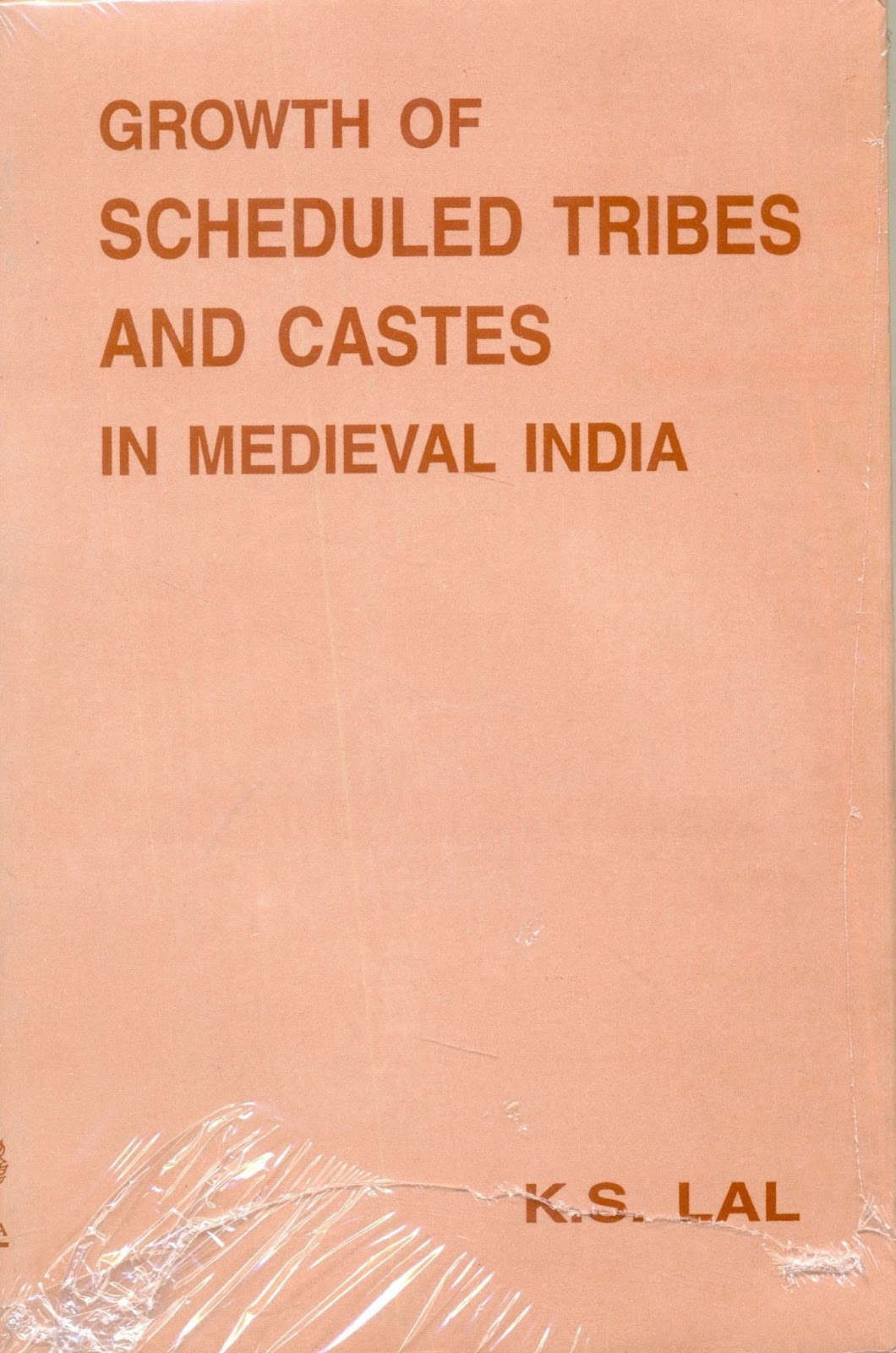
Dalits, Muslims, Gurkhas, Chambal, and more. Growth of Scheduled Castes and Scheduled Tribes in India - KS Lal

T
he myth of Dalit-Islam unity has been doing the rounds for a few decades now, despite a copious amount of evidence to the contrary and a near-complete absence of historical evidence to support the premise of any such unity. The primary causal factors for the persistence of this myth are poor scholarship among modern historians (which in turn can be blamed on the cabal of leftist historians who have a vice-like control on almost all institutions of historical research in India), the resurgence of radical ideologies that seek to warp facts to force-fit their worldview, and above all a general apathy towards the study of history in India. Dalits have found themselves at the receiving end of communal violence at the hands of Muslims in riots - whether it was the horrendous violence during Partition, or the equally horrific riots following the burning of 59 Hindu men, women, and children in a train near Godhra in Gujarat in 2002. Yet the myth of "Dalit-Muslim unity" lives on. To then say that the credit for the growth of India's tribal population (sometimes also referred to as Dalits) goes to the centuries-long Muslim rule in India between 712-1707 CE would be a surprise to most. Yet it is the proposition made and proven by distinguished historian, K.S. Lal, in his book, "Growth of Scheduled Tribes and Castes in Medieval India."

Sunday, May 29, 2016

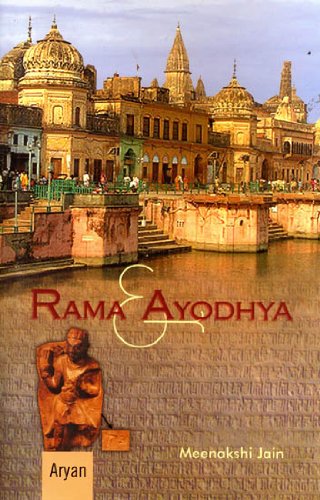
Rama and Ayodhya, by Meenakshi Jain

Rama and Ayodhya, by Meenakshi Jain
Aryan Books International; 2013 edition
(ISBN: 8173054517, 978-8173054518)

Rama and Ayodhya, by Meenakshi Jain

An indispensable, though brief, compendium to understand the past and present of Ayodhya.

The diffusion of propaganda requires repetition. In the words of someone many leftists have secretly admired for long, repetition is what makes propaganda successful (the full quote is (bold-emphasis mine), "The most brilliant propagandist technique will yield no success unless one fundamental principle is borne in mind constantly and with unflagging attention. It must confine itself to a few points and repeat them over and over".

This was a strategy used to brilliant success by militant Islamists, communist historians, and Indologists of dubious integrity in the west during the Ayodhya movement in the 1980s and 90s.

Diana Eck is a faculty member of The Prince Alwaleed Bin Talal Islamic Studies Program at Harvard University (which was established as a result of a $20 million grant by the Saudi prince, Alwaleed Bin Talal). In her 2012 book, "India: A Sacred Geography" (my review), she had very bluntly and pointedly argued against the evidence of a temple at the disputed site, citing "Indian historians and archaeologists, both Hindu and Muslim." The sole archaeologist she cited in her section on Ayodhya had this to say in her book - "There is not a single piece of evidence for the existence of a temple of brick, stone, or both." For reasons that should become clear very soon, Diana Eck chose to bury the archaeologist's name in the references section of her book. That archaeologist's name is D. Mandal, from the University of Allahabad.

Wednesday, March 23, 2016

Female Infanticide and Western Institutions

The Ford Foundation’s Quest to Fix the World - this New Yorker piece in the January, 2016 issue of the magazine, by someone named Larissa MacFarquhar caught my eye. The Ford Foundation is a highly controversial organization with an unsavory past in India (and I suspect in many other third-world countries), and I was therefore keen to know what the insufferably long and at-times rambling piece had to say about the Ford Foundation and India. To be honest, I suspected at the onset this was a puff piece done to massage the egos of the high-and-mighty at the Ford Foundation, and by the time I had read through it, my suspicions had been confirmed, and worse.
New Yorker piece on the Ford Foundation
There were two bits that caught my attention in particular.

The first was the following sentence - "In April, the government froze the bank accounts of Greenpeace India, and in the same month cancelled the registration of nearly nine thousand N.G.O.s that received money from abroad."
While true in itself, this sentence failed the basic smell-test of journalistic ethics. Why? Because the sentence presented facts selectively to present a manifestly one-sided version of what actually transpired.

Wednesday, September 16, 2015

History - 1 - The Accumulated Wealth of 348 Years

Nadir Shah at the sack of Delhi
(credit: Wikpedia, the free encyclopedia)
Of all the depredations that Delhi has suffered over the centuries at the hands of invaders, the one that stands out the most is the plunder by Nadir Shah in 1739. The Mughal empire would finally dissolve more than a century after this event, though it had started to become dissolute and decrepit after the death of Aurangzeb in 1707.

Nadir Shah had consolidated his position in Persia, and had conquered Kandahar to buttress the security of his eastern provinces. This conquest of Kandahar however left him cash-strapped for further conquests against the Turks. He wanted territory, money, and fame. The decaying Mughal empire looked like an ideal candidate to satisfy all three urges.

Nadir Shah's pretext, we are told, for invading India was the Mughal ruler's refusal to stop giving asylum to the Afghan rebels that had been troubling the eastern provinces of Nadir Shah's kingdom. This is only partially true. Such firmness in refusing Nadir Shah would have been quite out of character for Muhammad Shah.

Nadir Shah had first sent two envoys - Ali Mardan Khan Shamlu and Muhammad Ali Khan - to deliver this request to Muhammad Shah - the Mughal emperor - but "had received evasive replies." Nadir Shah then sent Muhammad Khan Turkman as his Persian envoy to deliver another protest to Muhammad Shah, with instructions to the envoy that he not "prolong his stay beyond forty days." Muhammad Shah again did not give any firm reply. Instead, "his advisers wasted their time in the controversy as to how to address the Persian upstart." The last straw for Nadir Shah was "the murder of two Persian courtiers who had been sent to Delhi under escort to bring news of Muhammad Khan Turkman."

Tuesday, August 18, 2015

History - 3 - Battle of Palkhed

Peshwa Baji Rao I riding a horse
(source: Wikipedia)
Among the notable battles fought in India, the Battle of Palkhed, between Peswha Baji Rao I and the Nizam-ul-Mulk, would not readily spring to mind for many. Which is a pity, for several reasons. While the three battles of Panipat – in 1526, 1556, and 1761, the battles of Talikota in 1565, Plassey in 1757, and Buxar in 1764, are rightly remembered for their pivotal impact on India’s history, the battle of Palkhed does not readily spring to mind. It should, for it is not only one of the notable battles in history, it also holds lessons that perhaps deserve a closer look.

The battle of Palkhed was fought in 1728, between the armies of Baji Rao, the second Peshwa of Maharaj Shahu, and the Nizam. A brief look at the three principal players who were involved directly or indirectly reveals a fascinating if not turgid brew of politics and intrigue that had by then become the staple of the putrefying Mughal empire in Delhi.

Monday, June 22, 2015

History (1) Of Frivolous Young Men and Depraved Morals

History repeats ... first as tragedy, then as farce - one of the most repeated quotes of Karl Marx could most political dynasties to a "T". India is no different.

Consider these two paragraphs, that I have partly edited for the sake of dramatic impact: the modified words are highlighted in bold
"He proclaimed his accession at Delhi. Though about fifty years of age, he behaved like a frivolous young man of eighteen. His morals were highly depraved. He drank heavily and passed most of his time in the company of his mistress, whose relations had obtained high posts in government service. Nor could his advisor fill in the void successfully. He had been overtaken with senile decay. He devolved his entire responsibility on his favourite ... With such persons at the helm of affairs, the fate of the administration can better be imagined than described."

Monday, March 16, 2015

Incredible History of India's Geography - Review

The Incredible History of India's Geography, by Sanjeev Sanyal
5 stars


Amazon India, Amazon US, Flipkart ebook, Flipkart

History books come in many flavours. There are the dry tomes that are read by few, yet quoted by many. There are the popular histories - the "pulpy" versions that are written by high-brow intellectuals who dress themselves as socialists yet work their connections at prestigious B-schools to get the sales that deliver impressive royalties. There are however a few notable exceptions here - like the books written by Michel Danino for instance (and Sanjeev Sanyal's "The Land of the Seven Rivers", but more on that later). Then there are the so-called histories written for children - the worst of the lot because not only do they dumb down history to the point of rendering it useless from both an educational and informational perspective, but they also commit the unpardonable sin of perpetuating discredited myths and vile lies about India and her history. The Aryan Invasion myth being the most favoured among them.

Friday, March 6, 2015

For Sir Wiston Churchill Was an Honourable Man

I penned a short article on Sir Winston Churchill that appeared in Swarajya Magazine on Feb 7, 2015. It, to my surprise, went viral and attracted more than one thousand "shares" on social media.

Here is the full article as it appeared:
For Sir Winston Churchill was an Honourable Man

24th January, 2015 was the fiftieth death anniversary of Sir Winston Churchill. While many celebrated the legacy and work of this British statesman there were also others who pointed out Churchill’s other side

Sir Winston Churchill authored the six-volume magnum opus, “The Second World War”, that proved to be a blockbuster bestseller, helped earn the author millions of dollars in today’s value, and even more – earned him a Nobel Prize in Literature. This work was written substantially by a team of ghost writers called The Syndicate – which researched and wrote the drafts for most of the book, as well as pulling material from the war records and archives. Sir Winston Churchill alone would collect the substantial royalties, credit, and the Nobel Prize.While Sir Churchill’s erudition on geography is well known – where he remarked that India was no more a country than the equator, it is his views on Indians that are to be cherished even more. He told his private secretary that ‘the Hindus were a foul race “protected by their mere pullation from the doom that is their due”‘ “He wished that Air Chief Marshall Arthur Harris, the head of British bomber command, could “send some of his surplus bombers to destroy them.”” No opprobrium would come Sir Churchill’s way.

Sunday, June 8, 2014

Accidental India, by Shankkar Aiyar

My review of Shankkar Aiyar's book, "Accidental India", was published in the DNA on May 22nd, 2014. Except for the review's title and sub-title - "Should I Be Stupid Just Because the Government Is?"
Funnily enough, in India that was a fact of life and not an absurdity for several decades. - the review was published in its entirety.

This, below, is the review as it appeared in the DNA:

The opportunities that India has squandered, either through indolence or apathy, either individually or collectively, are far too many to be counted. Then there are the quirks of fate that have convinced Indians that perhaps the gods had it in for India – like Lal Bahadur Shastri’s untimely demise just when it seemed India would break free of the socialist straitjacket that had been imposed on the nation, or Sardar Vallabhbhai Patel being asked to make way for Pandit Jawaharlal Nehru as India’s first prime minister despite being the more qualified and better person on every count, or the most unexpected loss of the NDA in the 2004 general elections just when the nation had found a new, confident, and resurgent voice. The list goes on. Perhaps the most public of all humiliations would have been the shipping of Indian gold reserves to England as surety for a paltry loan of $400 million from the Bank of England. But as in every dark cloud, there proved to the silver lining. An accidental silver lining of sorts.
Shankkar Aiyar’s book, Accidental India, has even more relevance in today’s environment, given the trend towards consumption of real-time information in an abbreviated manner (read social media, especially Twitter) which encourages an almost junk-food style of an information diet – quantity without much value. This book looks at seven “accidents” that shaped India’s post-independent socio-economic landscape, for the better, and substantially so.

Saturday, December 28, 2013

The Blood Telegram, by Gary Bass


The Blood Telegram: Nixon, Kissinger, and a Forgotten Genocide, by Gary Bass

Warning: graphic language. Reader discretion advised.


One-line review: Shines a light and lays bare an ugly passage in American diplomacy.

Short review: The forced exodus of ten million Bangladeshis in 1971 - ninety percent of whom were Hindu, the genocide of an estimated three million Bangladeshis, and the rape of close to half a million women - were all small prices that Henry Kissinger and Richard Nixon paid in exchange for the opening of bilateral ties with China, and in the process getting their names enshrined as visionary statesmen. Henry Kissinger would go on to win a Nobel Peace Prize - a more damning indictment of the elaborate farce that is the Nobel Prize would be hard to find. Archer Blood, consul general in Dacca (as Dhaka was then called) and the "ranking diplomat of the United States in East Pakistan", would protest in the strongest possible diplomatic terms the atrocities perpetrated by the Pakistan army on the citizenry of East Pakistan. He would be ordered to "request home leave and transfer back to the State Department - in other words, unceremoniously sacked" - just one step short of being fired - spend the next decade in a desk job - hiding from an omnipotent Kissinger, his career finished for all practical purposes.

Sunday, November 17, 2013

India's Iron Man - Sardar Vallabhbhai Patel, by Balraj Krishna


Sardar Vallabhabhai Patel: India's Iron Man (India's Bismarck: Sardar Vallabhbhai Patel), by Balraj Krishna

One-line review: His stupendous achievements dwarfed only by the apathy of an ungrateful polity and dishonest historians.

Short review: Unless we learn the path we took and who led us down the path, we can never truly hope to correct course and tread towards a brighter future. Blind hero-worship of flawed frauds and idolatry of insidious ideologies cannot ever be the basis of writing history. That is hagiography. This short book on Sardar Vallabhbhai Patel, the iron man of India, is a must-read for anyone interested in understanding what was, what happened, and why we are here. If we today breathe in a united and independent India, we have one person - Sardar Patel - to thank more than anyone else.

Monday, September 30, 2013

Lost City of Dvaraka, SR Rao

Lost City of Dvaraka, S.R. Rao

One-line review: Mythology excavated, history re-incarnated.

Short review: Arguably the single most important archaeological excavation of the twentieth century, the offshore marine excavations off Dvaraka began with a humble eighty thousand rupee grant. It helped plug in a thousand-year hole in India's ancient history - of what happened after the decline of the Harappan civilization and before the advent of the Buddha in the fifth century BCE. In the process was also established the historicity of a certain gentleman named Krishna Devakiputra - also known as the eighth incarnation of Narayana, Lord Vishnu. These two stunning implications of the excavations have not yet been fully appreciated, thanks to a benign neglect of archaeology by the government, the warped revisionism practiced by Marxist historiographers in India, and the Indian's general apathy to history.

Sunday, September 1, 2013

The Lost River: On The Trail of the Sarasvati, Michel Danino

The Lost River: On The Trail of the Sarasvati, by Michel Danino

The Lost River: On The Trail of the Sarasvati, by Michel Danino

 Kindle IN, Amazon US, Amazon IN, Kindle US, Flipkart

One-line review: Remarkable book that tells the remarkable history of a remarkable river that sustained a remarkable civilization!

Short review: It is rare that a book flows with the same ease and felicity as the river it seeks to describe. This is that rare book. The river Saraswati, when it flowed some five thousand years ago, gave birth to the most massive and advanced ancient civilization that existed. The almost million square kilometers of land that formed the Indus Saraswati Civilization saw the development of the most advanced urban planning in the ancient world, a system of standardized weights and measures that boggles the mind, a social order that was more egalitarian than has ever existed anywhere since. When the river stopped flowing - severely depleted by the "double desertion" of the Sutlej and Yamuna - it caused a massive abandonment of the Indus Saraswati sites, with its residents migrating to the Gangetic plains and elsewhere, giving birth to a new phase in the evolution of the Vedic dharma which saw its birth amidst the fertile plains of the Indus Saraswati. That the existence of this once mighty river is in dispute is itself a sordid tale of ideologies polluting academics. Michel Danino writes fluidly, engagingly - makes this book a page-turner.

Long review: